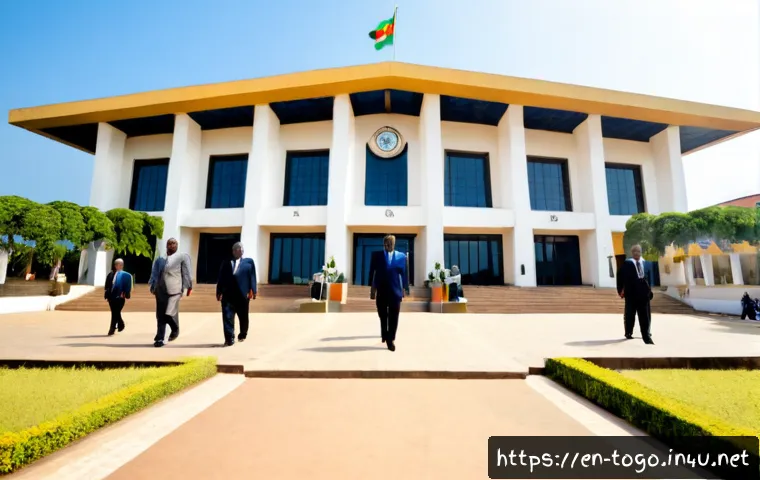
Togo now operates under a parliamentary-oriented constitutional framework introduced in 2024, with the President of the Council of Ministers as the central executive office.
The reform matters because older guides may still describe Togo primarily as a strongly presidential system. For researchers and country-risk teams, the key task is to separate the formal constitutional design from the way political authority works in practice.
The National Assembly, Senate, executive offices, courts, and electoral institutions should be assessed together rather than in isolation. Political monitoring, legal compliance research, and local expertise can be useful when a decision depends on current institutional developments.
At a Glance
- Togo is a West African republic, and its capital is Lomé.
- The 2024 constitution moved the country from a strongly presidential framework toward a parliamentary-oriented system.
- The President of the Council of Ministers became the central executive position; Faure Gnassingbé assumed this office in 2025.
| Institution or Issue | Formal Relevance | Why It Matters in Practice | What External Observers Should Monitor |
|---|---|---|---|
| President of the Republic | Part of the new constitutional structure | Its long-term relationship with other executive institutions remains important to assess | Constitutional implementation and institutional practice |
| President of the Council of Ministers | Central executive office under the 2024 framework | Key point for understanding executive authority and policy direction | Cabinet authority, political alliances, and policy continuity |
| National Assembly | One chamber of the legislature | UNIR won a large majority of seats in the April 2024 legislative elections | Legislative alignment and representation debates |
| Senate | Part of the legislature under the current framework | Adds another institution to legislative and constitutional analysis | Its evolving role in the new system |
| Political-risk research | Supports current analysis rather than replacing primary sources | Useful when market-entry, compliance, or program decisions depend on political developments | Update frequency, local coverage, source transparency, and legal review options |
How Togo’s Current Political System Works
The Short Answer: A Parliamentary-Oriented System with a Powerful Council of Ministers
Togo’s current constitutional framework is best understood as parliamentary-oriented, rather than as the strongly presidential system described in many older references. The 2024 constitution created the office of President of the Council of Ministers as the central executive position. Faure Gnassingbé, president since 2005, became President of the Council of Ministers in 2025.
This does not mean that a short label tells the whole story. Researchers should examine how the President of the Republic, the President of the Council of Ministers, parliament, and the Senate interact over time. The practical balance of power remains a subject requiring current verification.
Why the 2024 Constitutional Reform Changed the Institutional Map
The constitution was adopted in 2024 and promulgated in May 2024. Its importance lies in the shift of the institutional map: executive authority is no longer assessed only through the presidency. A reader now needs to consider the Council of Ministers, the legislature, and the relationship between formal offices.
For a country-risk assessment, this change affects the questions worth asking. Instead of asking only who occupies the presidency, ask which office has central executive authority, how parliamentary majorities support governance, and whether institutional roles are being clarified through practice.
What Readers Should Verify When Using Older Political-System Guides
Older material may use a presidential-system description without reflecting the 2024 constitutional reform. That can lead to an incomplete analysis of executive power, legislative influence, or election-related risk.
Before relying on a guide, verify its publication date and whether it addresses the 2024 constitution, the creation of the President of the Council of Ministers, the bicameral legislature, and subsequent political developments. A current political-monitoring service or local legal research provider may be particularly useful when timing matters.
Key Institutions and Their Roles
The President of the Republic
The President of the Republic remains part of Togo’s constitutional structure. However, the 2024 reform means that readers should not assume that this office alone defines executive authority in the same way as under the former strongly presidential model.
The practical long-term balance between the President of the Republic and the President of the Council of Ministers is an area to monitor. Constitutional text is essential, but real-world institutional influence may also be shaped by political alliances, elections, and later interpretations.
The President of the Council of Ministers
The President of the Council of Ministers is the central executive position created by the 2024 constitutional framework. This office is therefore the starting point for anyone assessing government leadership, administrative direction, and policy continuity.
For business teams, NGOs, and journalists, the useful question is practical: which decisions or policy signals should be tracked through this office and the broader Council of Ministers? That answer may develop over time, so an up-to-date country report should distinguish confirmed institutional facts from interpretation.
The National Assembly and Senate
Togo’s legislature includes the National Assembly and a Senate under the current constitutional framework. This makes legislative analysis more important than it may have appeared in older presidential-system summaries.
In the April 2024 legislative elections, the ruling Union for the Republic, or UNIR, won a large majority of National Assembly seats. That majority is relevant to policy continuity and legislative alignment. Still, seat totals alone do not fully explain how power operates across executive institutions, political parties, or public debate.
Courts, Electoral Institutions, and Constitutional Oversight
Courts, electoral institutions, and constitutional oversight are important parts of a complete governance review. They should be considered alongside executive offices and parliament, especially when assessing electoral processes, constitutional interpretation, or regulatory uncertainty.
A careful researcher should avoid assuming that formal institutional design automatically predicts every outcome. Future judicial interpretations and electoral developments may affect how the new framework functions in practice.
Comparing the Old and New Governance Models
Presidential System Versus Parliamentary-Oriented System
Under the earlier strongly presidential framework, political analysis often centered on the presidency. Under the 2024 constitution, analysis should give greater attention to the parliamentary-oriented structure and the central role of the President of the Council of Ministers.
The distinction matters for due diligence. A research note that identifies the President of the Republic but does not explain the Council of Ministers or parliamentary context may miss the main institutional change.
Where Executive Authority Is Concentrated
The formal answer is clear: the 2024 constitution places the President of the Council of Ministers at the center of executive authority. The practical answer requires ongoing observation. The future balance among the President of the Republic, the President of the Council of Ministers, parliament, and the Senate cannot be treated as permanently settled.
This is a common country-risk mistake: treating a constitutional reform as if implementation were already complete and predictable. Strong analysis separates formal authority, political influence, and operational decision-making.
A Comparison Table for Political Researchers and Country-Risk Users
| Research Question | Earlier Strongly Presidential Lens | Current Parliamentary-Oriented Lens |
|---|---|---|
| Who should be reviewed first? | The presidency | The President of the Council of Ministers, the President of the Republic, and parliamentary alignment |
| How should legislation be assessed? | Often as secondary to presidential authority | Alongside the National Assembly and Senate within the current framework |
| What creates uncertainty? | Presidential politics and elections | Constitutional implementation, executive balance, elections, and political alliances |
| What is the main research risk? | Using incomplete political context | Using outdated constitutional descriptions or confusing formal roles with practical influence |
Elections, Political Parties, and Representation
The Role of UNIR and the Parliamentary Majority
UNIR’s large National Assembly majority following the April 2024 legislative elections is a major fact for political analysis. It may be relevant to how legislation, policy continuity, and institutional cooperation are evaluated.
For external observers, the key is not merely to record that a majority exists. It is to consider how that majority fits within the newer constitutional system, including the role of the Council of Ministers and the wider legislative structure.
Opposition Participation and Electoral Debate

Political reforms, electoral representation, and the distribution of executive authority remain important subjects of public debate in Togo. These debates matter because constitutional change can affect how political actors frame representation, authority, and institutional legitimacy.
Researchers should review current election reporting and political analysis rather than relying on a single historical account. A balanced review should identify confirmed results, reported institutional changes, and unresolved questions separately.
Why Seat Totals Alone May Not Explain Political Influence
Parliamentary seat totals are important, but they are not a complete measure of political influence. Executive offices, constitutional roles, public debate, electoral developments, and future alliances can all shape the practical political environment.
For this reason, a political-risk report should not reduce Togo to one number, one party, or one office. The better approach is to track the connections between constitutional authority, legislative strength, and implementation.
Practical Considerations for Researchers, Investors, and NGOs
Assessing Policy Continuity and Regulatory Risk
For organizations considering activity in Togo, the central issue is not predicting every political outcome. It is identifying which developments could affect policy continuity, regulatory expectations, institutional engagement, or operational planning.
A practical review should cover the current constitutional framework, the authority of the Council of Ministers, parliamentary developments, election-related uncertainty, and relevant public debate. This is especially helpful where a project depends on government approvals, compliance planning, or long-term stakeholder engagement.
When to Use Local Legal, Compliance, or Political-Risk Expertise
Local legal, compliance, or political-risk expertise can add value when a decision depends on current rules, official interpretation, or institutional practice. This is not a substitute for internal judgment, but it can help teams avoid relying on outdated constitutional summaries.
When comparing providers, look for date-stamped updates, clear source methods, local coverage, a distinction between facts and analysis, and the ability to explain what has changed since the 2024 reform. Official guidance and detailed service conditions should be checked on the relevant provider page before engagement.
Avoiding Outdated Constitutional and Election Information
The simplest safeguard is to check whether every major source reflects the constitution promulgated in May 2024. Then check whether it recognizes the President of the Council of Ministers as the central executive office and includes the National Assembly and Senate in its institutional map.
Be cautious with reports that use broad labels without dates. “Presidential system,” “parliamentary system,” and “executive authority” can be useful terms, but they need context. In Togo’s case, the transition to a parliamentary-oriented model makes that context essential.
Selection Criteria and Comparison Summary
Before choosing a political-monitoring, compliance research, or market-entry research service, check these points:
- Constitutional coverage: Does the material clearly address the 2024 constitution and its May 2024 promulgation?
- Executive analysis: Does it explain the role of the President of the Council of Ministers rather than focusing only on the presidency?
- Legislative context: Does it cover the National Assembly, Senate, and UNIR’s large 2024 National Assembly majority?
- Update discipline: Are publication dates and later political developments easy to identify?
- Practical limits: Does the provider separate constitutional facts from conclusions about real-world influence?
- Decision fit: Is the depth of legal, compliance, or country-risk coverage appropriate for your planned activity?
For a time-sensitive decision, review the provider’s official methodology, update policy, and detailed service scope on the relevant page before choosing a research or monitoring option.
In Closing
Togo’s political system should now be analyzed through its 2024 parliamentary-oriented constitutional framework. The President of the Council of Ministers is central to that framework, while the President of the Republic, parliament, the Senate, courts, and electoral institutions remain relevant to a complete picture.
The most reliable approach is to use current sources and avoid treating older presidential-system descriptions as sufficient. Constitutional reform is a major reference point, but its longer-term institutional effects still require observation.
Useful Additional Information
Capital: Lomé.
Constitutional milestone: A new constitution was adopted in 2024 and promulgated in May 2024.
Legislative context: Togo has a National Assembly and Senate under the current constitutional framework.
Research reminder: Public debate continues around political reform, electoral representation, and the distribution of executive authority.
Important Notes
This overview is limited to the stated constitutional and political facts. The practical long-term balance among the President of the Republic, the President of the Council of Ministers, parliament, and the Senate may change through future elections, judicial interpretations, political alliances, and institutional practice. Readers should verify the current composition of government bodies and the status of individual political figures at the time they use this information.
Frequently Asked Questions
Q1. Is Togo a presidential system or a parliamentary system today?
A1. Togo’s 2024 constitution shifted the country from a strongly presidential model toward a parliamentary-oriented system. The President of the Council of Ministers is the central executive position under this framework.
Q2. Who has the most executive power under Togo’s 2024 constitution?
A2. The constitution created the President of the Council of Ministers as the central executive office. However, the practical long-term balance of authority among this office, the President of the Republic, parliament, and the Senate should be verified through current developments.
Q3. Is political-risk research worth paying for before investing or operating in Togo?
A3. It can be useful when a decision depends on current constitutional implementation, regulatory conditions, election-related uncertainty, or government engagement. Compare services based on update frequency, source transparency, local expertise, and whether they distinguish formal constitutional rules from practical political influence.